Power Wheels play support: +1-800-749-7321 | [email protected] STEM-ready ride-ons | RC & electric toys | EN
Power Wheels STEM electric toy lab
Innovation Lab

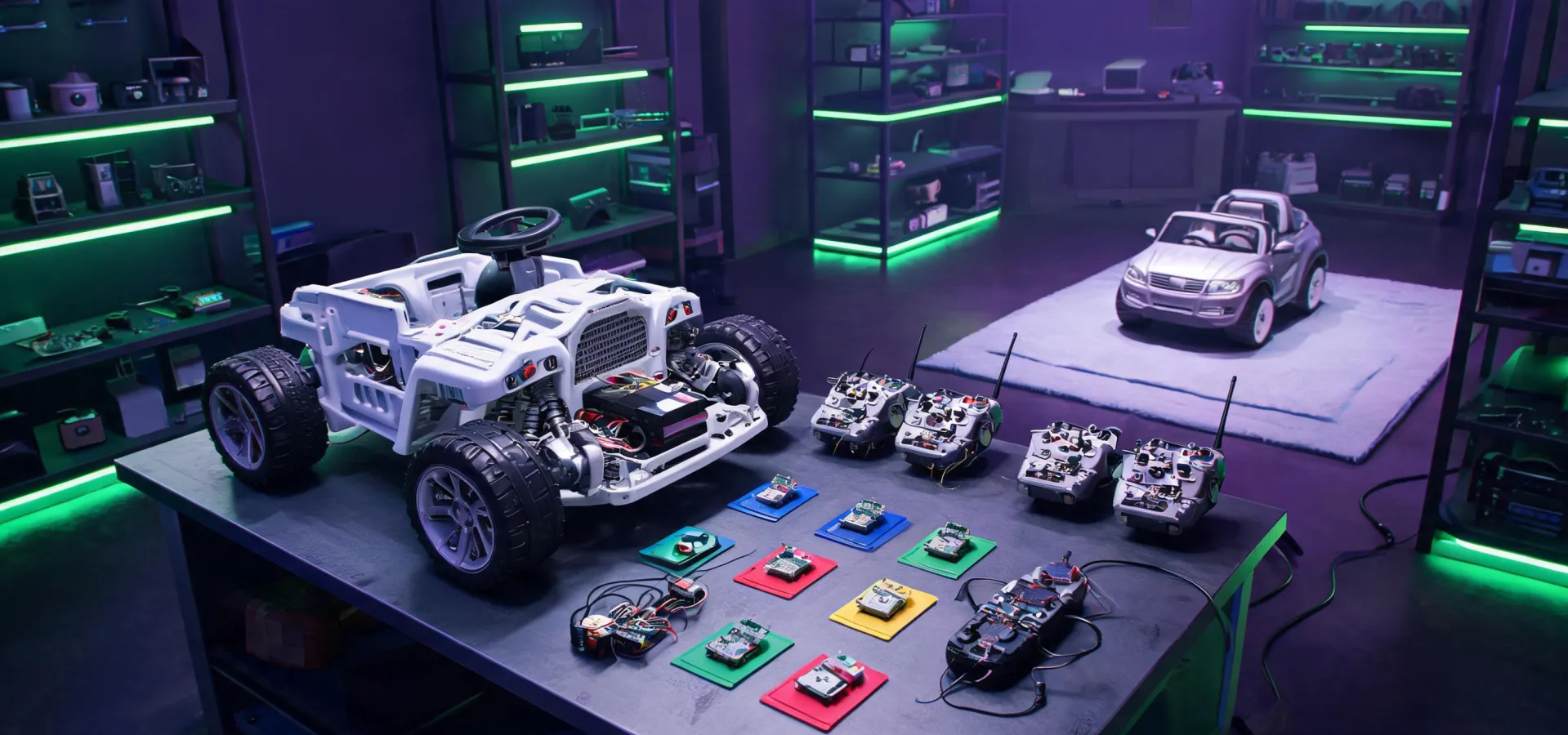
Power Wheels turns electric toys into hands-on STEM moments.

The lab studies motors, steering response, battery cues, controller behavior and child-friendly feedback so ride-on vehicles and RC toys can teach cause-and-effect while still feeling like bold play.

Development dashboard

This dashboard-style section tracks the signals Power Wheels uses before a product story reaches families. The numbers are static content for the page, not hidden backend fields, and they describe how our innovation team weighs electric behavior, age fit and play clarity.

Signal 01 Control Feel

Steering, start feel and stopping clarity are reviewed against the child's expected coordination stage.
Signal 02 Battery Story

Charging labels, runtime language and storage notes are shaped for parents who need fast answers.

Signal 03 RC Learning Loop

Remote-control toys are checked for prediction, reaction, reset and repeat-play value.

Signal 04 Safety Language

Age grades, supervision notes and warning placement stay visible without making the page feel alarmist.

Research packets

Readable lab outputs for product, retail and support teams.

Power Wheels does not publish vague technical decoration. Each packet theme below gives a team a practical way to explain electric play, whether the page is presenting a toddler vehicle, a big-kid RC car or a giftable launch bundle.

PDF

Electric Play Language Map

Explains how to connect motors, steering and battery cues to parent-friendly product copy.

Request packet
DOC

Age-Stage Control Checklist

Helps separate first-ride, preschool vehicle and big-kid RC requirements in launch planning.

Request packet
ZIP

Campaign Image Prompt Set

Provides scene ideas for driveway rides, RC tracks, charging stations and STEM play moments.

Request packet
Lab timeline

How an electric play idea becomes launch-ready.

Step 1

Define the child stage

The team starts with age, coordination and play space. A driveway ride-on for a toddler needs a slower confidence arc than an RC toy for an older child who enjoys timed challenges.

Step 2

Prototype the response

Steering, launch feel, stop behavior, light feedback and controller mapping are tested as teachable moments. The aim is clear cause-and-effect, not confusing feature overload.

Step 3

Translate the technology

Once the play pattern is understood, Power Wheels turns it into product page copy, comparison notes, FAQ language and image prompts that families can scan quickly.

Step 4

Prepare the launch story

Final materials connect the toy to a real shopping moment: birthday gift, outdoor weekend, first ride, RC skill practice or a retail program built around electric play.

Bring a ride-on or RC concept into the lab conversation.

Power Wheels can help translate electric toy features into a clearer, safer and more exciting family-facing program.

Request a Lab Review